Lone Black Stork Returns to Belarus Village for Sixth Summer in a Row
A Lonely Bird in Search of Friends
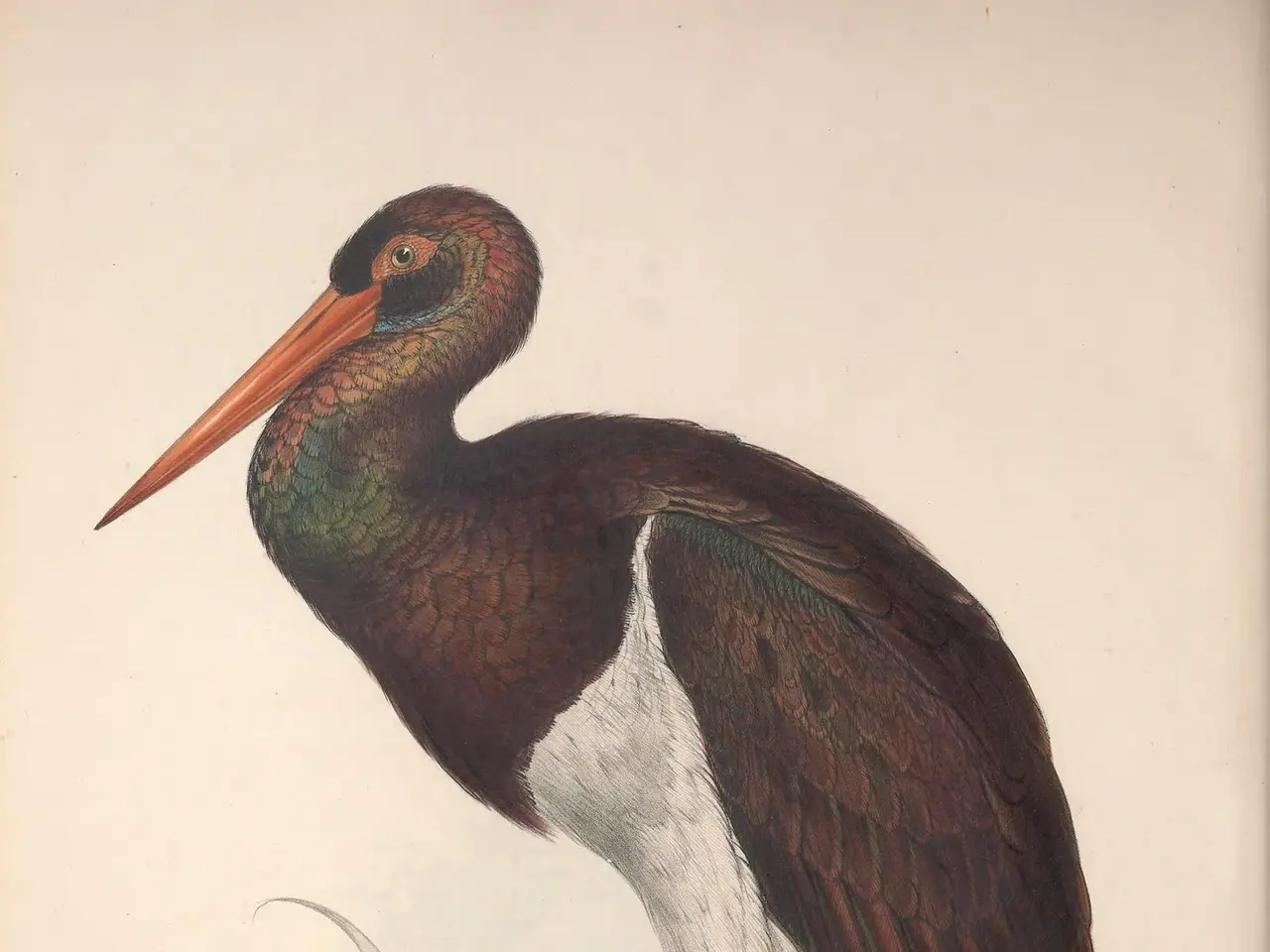
In Belarus's Kletsk District, a rare resident has taken up an unusual habit—a black stork that keeps trying, without success, to befriend its white cousins, reports Smartpress.
Black storks typically avoid humans, nesting deep in forests on sturdy oaks, aspens, or pines with thick branches. But for six years now, this particular bird has defied the norm, returning each spring to the village of Sekerychi and spending the entire summer near a white stork's nest. The endangered male, listed in the Red Data Book, has remained without a mate year after year, even occasionally facing rebuffs from the white storks for his persistent attempts to get close.
Locals wondered whether their unusual feathered neighbor would return to the village this spring or finally move to the forest, find a partner, and start a family of his own. Now they have their answer.
"He arrived in Sekerychi on April 14 and claimed his usual 'lookout' post—a utility pole near the still-empty nest of the white storks," said biologist Sergei Shokalo. "From time to time, the bird would fly over and stand pensively in that nest. Like his white relatives, he foraged on the freshly plowed fields around the village."
Meanwhile, the white storks got down to the business of raising their own brood. Now, the lone black stork patiently keeps watch near the nest where a white stork sits on her eggs.
No one knows why he remains so attached to a related but ultimately different species. Still, people hold out hope that the bird will one day find his own happiness—perhaps by meeting a suitable female of his kind.
The black stork, a rare and protected species, was named Belarus's Bird of the Year for 2026. Its population in the country is estimated at just 900–1,300 pairs. As old-growth forests continue to be logged, these majestic birds are losing the towering trees they need to build their nests.