How a Kazakh artisan turned a window shop into a regional manufacturing powerhouse
"Everything is possible in life—impossible things just take a little more time," Aмангельды Mukhanbetov often says.
Just ten years ago, most of the playgrounds and outdoor workout zones installed in Uralsk's courtyards and public spaces were ordered from bordering Russian regions. Today, the market for these products is so competitive that even local manufacturers are vying for customers. One of them, the sole proprietorship Plaskom, supplies custom-made equipment not only across West Kazakhstan but also to neighboring regions.
Aмангельды Mukhanbetov, the company's director, believes that both professional and life experience are crucial for starting a business. Born in Zhanagalinsky District, he finished school in Uralsk after moving there with his mother and four sisters from their village. For 17 years, the family lived in rented housing. It was only in 2007 that his mother—a woman raising five children—received a plot of land for construction, where Mukhanbetov later built their house.
As a child, he was passionate about drawing and studied for five years at an art school, even planning to enroll in a fine arts program. But when he fell short of the required scores for state-funded admission, he took a job at a Dom Bytа (household services center), painting portraits on memorial plaques.
After his military service, he spent nearly 15 years working in a joinery workshop producing doors and windows. At a major construction company, he rose to the position of deputy production manager, overseeing carpentry, welding, and ventilation system manufacturing.
The path of an entrepreneur is a constant search for new ideas, opportunities, and solutions. Those who transition from employment to business have already reached a certain level of professional maturity, readiness for risk, and responsibility.
"I've been working for myself since 2010," Mukhanbetov recounts. "At first, I rented a production space in Uralsk. We started with plastic windows—which is why the business is called Plaskom (a blend of plastik—plastic—and kompaniya—company)."
When competition in the window market grew fierce, they pivoted to installing ventilation systems. Some of the ductwork they mounted at the Adal market is still in use today.
Next, they produced double-glazed units for plastic windows but again struggled against larger competitors. They then launched a line of expanded clay blocks—the equipment for which still sits on their premises—and later began manufacturing kitchen sets and interior doors. Mukhanbetov even traveled to Penza, Russia, for a furniture-making master class. For a time, the business was a family affair, run alongside his brother-in-law, who now manages that branch independently.
A Playground for the Littlest Customers
The idea to produce children's playgrounds came to Mukhanbetov six years ago, when a client asked him to deliver several play complexes from Samara. That's when he thought: Why not make them right here in Uralsk, since there's clearly demand?
Business Steadily Gains Momentum
Amanzhol secured a plot in the industrial zone of a suburban village. Within a year, he built a workshop, warehouse, and administrative facilities. This allowed him to change the land's status from leased to owned. Production of not only children's playgrounds but also outdoor workout zones and doors was relocated here.
"Right now, we're producing a small batch of components for playground equipment. We source metal locally, while plywood and lumber come from Russia. We use engineered wood—unlike solid timber, it doesn't crack, making it ideal for furniture, staircases, and playgrounds. We always order moisture-resistant plywood, and lately, we've been using pre-primed sheets as well. The primer seals the pores, preventing the wood from swelling or delaminating due to moisture while also improving its resistance to temperature fluctuations. This helps our products retain their original appearance and durability much longer," Amanzhol explains, sharing insights into the production process.
Over four years, the small enterprise has manufactured hundreds of playground complexes, including sandboxes with mushroom-shaped canopies, swings, merry-go-rounds, slides, spring riders, and other custom elements requested by clients.
Incidentally, the playgrounds in the courtyards of the first seven residential buildings completed in the under-construction Akzhaik microdistrict were made by this company. Come spring, the business will once again need to ramp up production significantly. Its clientele extends beyond construction firms. Following the tradition established by the Rukhani Zhangyru ("Spiritual Renewal") program, rural residents often purchase playgrounds and sports facilities as gifts to their hometowns. Orders have been particularly numerous from the Karatobe and Zhangalinsky districts.
In Atyrau, an oil company allocates 200 million tenge annually for these purposes as part of its social obligations. Residents decide which playgrounds they need. Where space permits, adult fitness stations are installed alongside swings and merry-go-rounds. Service companies managing apartment buildings and residential complexes place the orders and take ownership of the equipment.
Since demand for its core products is seasonal, the business shifts to manufacturing interior doors in winter. Solid and adorned with emblems and patterns, these custom-made doors add a striking touch to restaurant interiors. This year, the company plans to build a dedicated painting workshop for this production line.
Since January, they have also begun producing metal entrance doors. With residential construction in the region growing year by year, there are increasing opportunities to collaborate with developers. Another relatively new venture is the production of protective cages for outdoor air conditioning units. Their installation—especially in new buildings and housing complexes—has become mandatory, not only for aesthetic reasons but also for safety.
The Daum Foundation has already supported the entrepreneur twice with preferential lending, enabling a significant expansion of his machine fleet and the purchase of specialized equipment. Thanks to state backing, the company acquired grinding, panel-sizing, and laser machines, as well as CNC press brakes and milling machines.
Today, Amanzhol Muhanbetov's sons—Altynbek and Bekzat, the two eldest of five children—operate the CNC machines. Amanzhol himself often sketches ornamental designs for door panels. A seasoned mentor, he has guided many young workers, helping them hone their professional skills while inspiring them to grow.
"Master new techniques, refine your craft, experiment, make mistakes—just don't give up. Find your path. Running your own business isn't easy. But as one wise man said, anything is possible in life; the impossible just takes a little longer," says Amanzhol Muhanbetov.
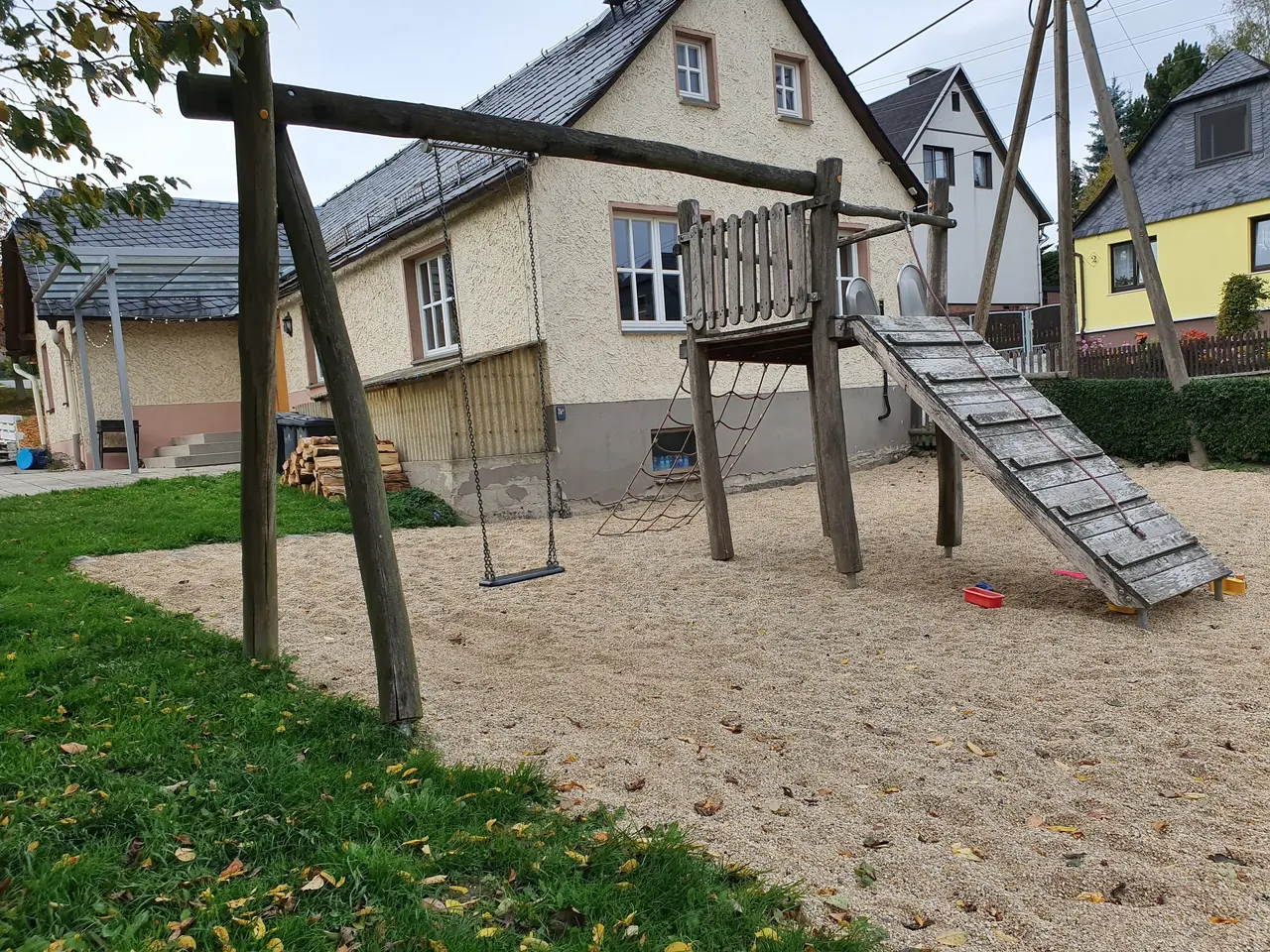
How do you measure a business's maturity? Sometimes it's not just about profit growth, production capacity, or headcount—it's about an entrepreneur's social responsibility. Last year, ahead of Eid al-Adha, a new children's playground appeared near the production site of Plaskom (an individual enterprise). The businessman installed it free of charge for the many young children from neighboring streets in the village.