Vienna's MAK Museum Rewrites Art History With AI and Bold Illusions
A bold new exhibition at Vienna's MAK museum reimagines the city's artistic legacy through modern eyes. Combining artificial intelligence, optical tricks, and striking displays, it brings 1900s Viennese graphic design into sharp, colourful focus. The show avoids hero-worship, instead placing lesser-known figures—particularly the women of the Wiener Werkstätte—at its heart.
The exhibition opens with a digital twist: AI restores historical interiors in vivid hues, breathing fresh life into century-old spaces. Nearby, Gustav Klimt's nine-part sketch for the Stoclet Frieze takes centre stage, its delicate lines and handwritten notes visible up close.
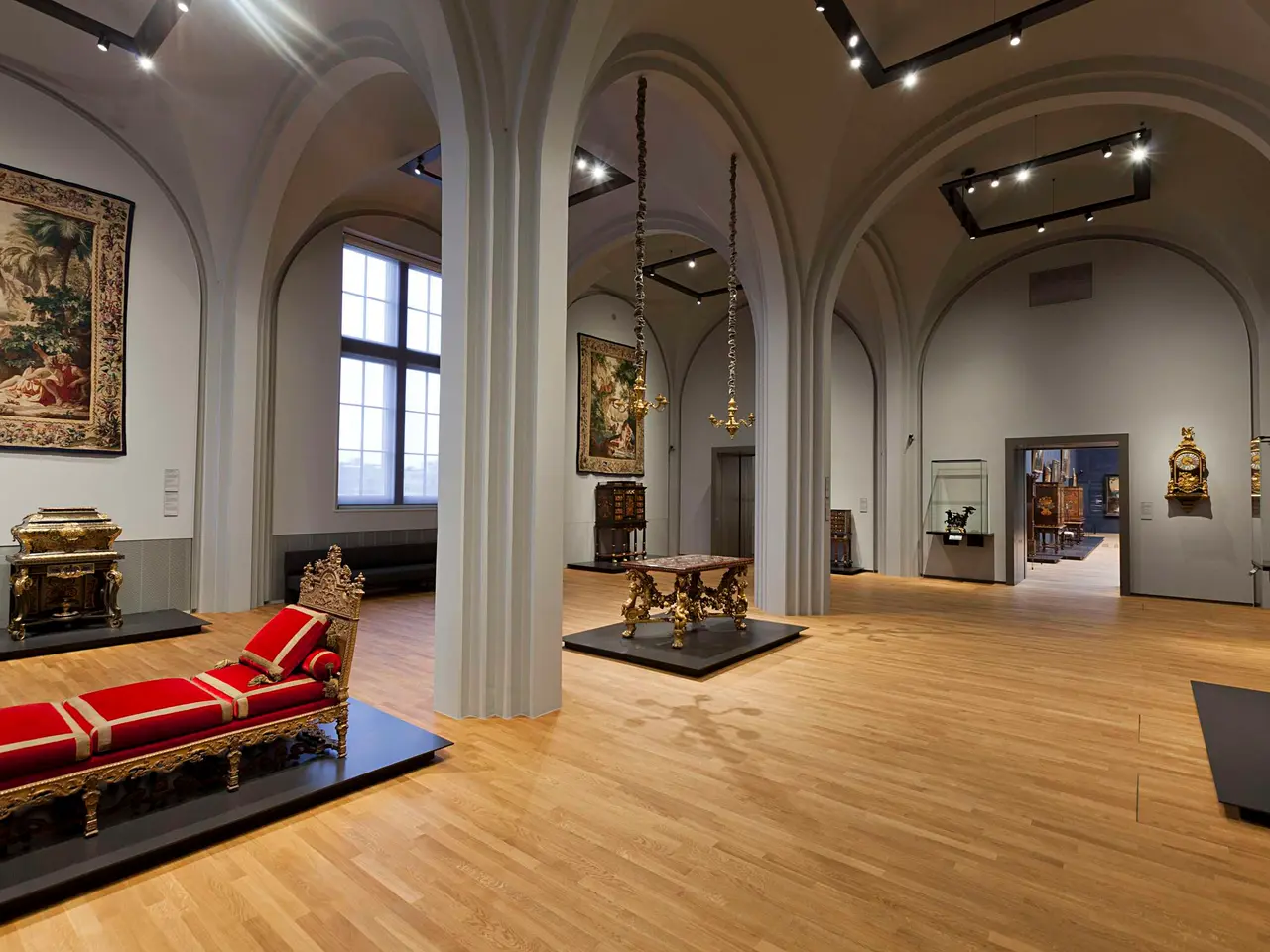
Visitors encounter playful illusions throughout. A wall of Wiener Werkstätte postcards dissolves when viewed from the side, while slatted images and mirror cabinets create shifting perspectives. In one corner, cutlery and silverware are meticulously arranged into the shape of a robot—a nod to the show's blend of modernism and sci-fi.
The artist, born in 1973, extends the Gesamtkunstwerk tradition by merging paintings, furniture, and tech. Displays zoom in on objects, and a single case features Adolf Loos, his controversial legacy addressed in a drawer beneath. The final gallery shifts focus entirely to the women of the Wiener Werkstätte, their everyday designs celebrated in glass cases.
Science fiction meets Viennese craft in unexpected pairings. Fritz Lang's Metropolis stills share space with Wiener Werkstätte glass, while Friedrich Kiesler's R.U.R. stage designs bridge past and future. The exhibition also previews a 2024/'25 solo show for Dagobert Peche, whose flamboyant work once clashed with Josef Hoffmann's restrained modernism—a contrast the MAK revives through its newly arranged collection.
The exhibition reframes Vienna's artistic history without glorifying its biggest names. By highlighting overlooked creators and using modern techniques, it offers a dynamic, immersive take on the era. The show runs alongside the MAK's permanent Vienna 1900 display, where Peche's bold designs and Hoffmann's minimalism continue to spark conversation.