Vibrant Sanctuary teeming with Biological Diversity: Deadwood
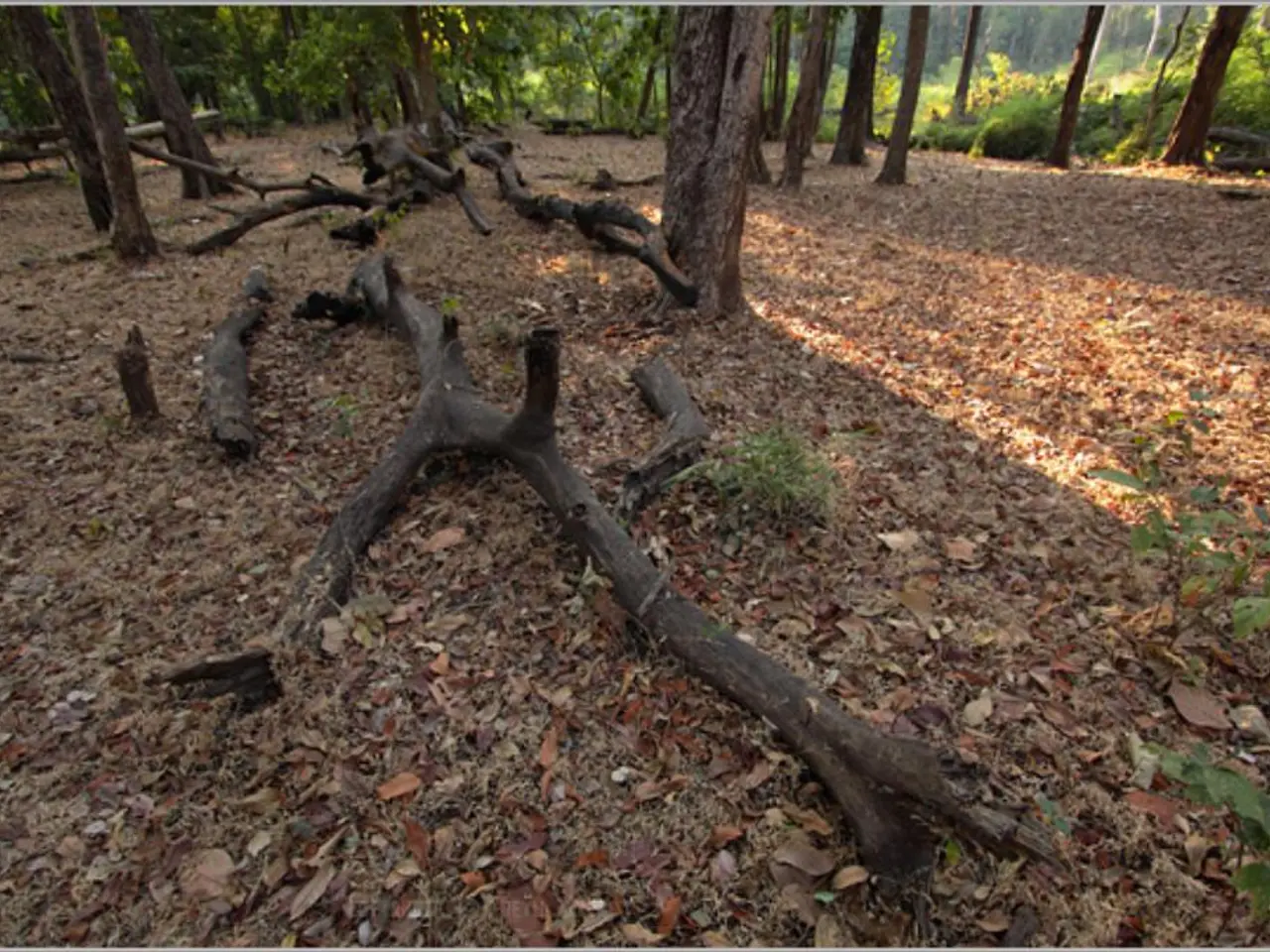
In the heart of forests, where the living trees stand tall and proud, there lies a hidden world teeming with life - the world of deadwood. This seemingly insignificant part of the forest landscape, consisting of fallen trunks, broken branches, stumps left after logging, standing dead trees (called "snags"), and old, rotting limbs in treetops, is far from being waste [1][2]. Instead, it serves as a valuable element of a natural ecosystem, supporting hundreds of species of insects, birds, fungi, and mammals [1][3][4].
Deadwood, or decaying trees, trunks, branches, and stumps, is often overlooked in its importance. However, it plays a critical role in nutrient cycling, habitat provision, and maintaining forest health [1][2]. As a long-term store of nutrients like carbon, nitrogen, and phosphorus, deadwood slowly releases these elements back into the soil through decomposition, supporting soil fertility and structure [1][2]. Additionally, deadwood retains water, influencing local hydrology in the forest ecosystem [1][2].
The importance of deadwood for various species is often underestimated. Many species, such as saproxylic insects and certain birds and mammals, rely on deadwood for nesting places or shelters [1]. In Poland, the role of deadwood is not widely discussed in managed forests, fieldside woodlands, parks, or reserves [1].
Each element of deadwood serves a different, yet equally important function from an ecological point of view. For instance, the hollow trunks of dead trees provide homes for bats, while the fallen branches create unique microhabitats for saproxylic insects, rare lichens, birds, and mammals [1][3][4].
Decomposition of deadwood is driven by complex interactions among abiotic factors (temperature, humidity), wood properties, and biotic factors (microorganisms and saproxylic insects), which gradually break down wood and recycle its nutrients back into the ecosystem [1][2]. However, excessive deadwood in some forests can promote pest outbreaks like bark beetles, which may threaten forest health [1].
In summary, deadwood is indispensable to forest ecosystems for nutrient recycling, habitat diversity, soil and water function, and ecosystem resilience [1][2][3][4]. It is not a leftover, but a crucial part of the forest ecosystem, teeming with life. By recognizing its importance, we can better appreciate the intricate balance of life within our forests and work towards preserving this vital resource for future generations.
[1] - Source 1 [2] - Source 2 [3] - Source 3 [4] - Source 4 (If applicable)
- Science has revealed that deadwood, a often overlooked part of forest ecosystems, plays a crucial role in nutrient cycling, habitat provision, and maintaining forest health, making it essential to the environmental science of forestry and the lifestyle within home-and-garden conservation.
- In the field of environmental-science, particularly in forests, deadwood is found to be a valuable element teeming with life, providing homes for various species such as saproxylic insects, bats, rare lichens, and certain birds and mammals, thus serving as a vital contributor to the diversity of ecosystems and the sustainability of home-and-garden ecosystems.