
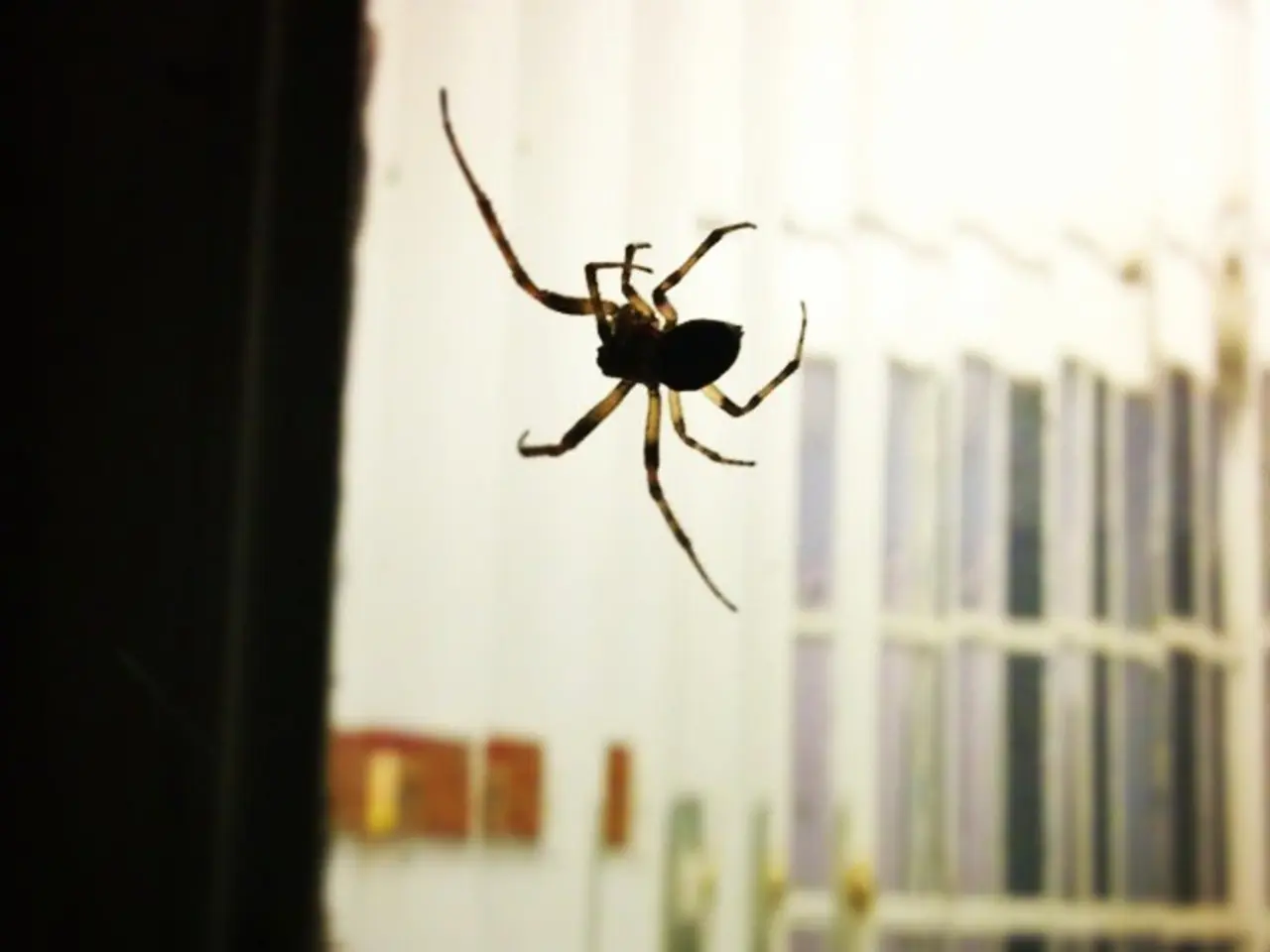
Stunning imagery showing the appeal of arachnids for those who admire spiders
In the realm of human emotions, the fear of spiders, or arachnophobia, remains a compelling topic. The current understanding suggests that arachnophobia arises from both evolutionary factors and learned behaviors.
Evolutionarily, humans may have inherited a cautious approach towards spiders due to the potential threat posed by venomous species in our ancestral past. This innate wariness could be the evolutionary basis for arachnophobia[1][2].
From a learned behavior perspective, negative or traumatic experiences such as a spider bite or frightening encounters with spiders can trigger the development of arachnophobia. Observing others—especially caregivers or peers—demonstrate fear or anxiety about spiders during childhood can also influence the development of arachnophobia through social learning. Cultural influences, including media portrayals that depict spiders as dangerous and sinister, can further reinforce or amplify this fear[1][2].
Individual personality traits, such as a naturally anxious or hyper-alert temperament, can also make some people more susceptible to developing strong fear responses towards spiders[2].
Arachnophobia manifests as intense anxiety, physical symptoms like rapid heartbeat and panic attacks, and avoidance of spider-related situations. It is highly treatable through cognitive-behavioral therapy (CBT), which addresses irrational thoughts and gradually exposes individuals to spiders to reduce fear[1][2].
This photo gallery is available, providing an opportunity to appreciate the beauty of spiders and potentially aid in reducing fear or increasing understanding. Tarantula and Bug Petting Zoos offer hands-on experiences to help people overcome their fears. A study suggests that subliminal exposure to photographs of spiders can also reduce people's apprehension[3].
It's important to note that no single cause for arachnophobia has been universally accepted among scientists. Some researchers attribute fear of spiders to an evolutionary survival instinct, while others argue that it is a learned behavior[1][2].
This Halloween, delve into the fascinating world of spiders with our seasonal photo gallery. Explore the diverse species, their intricate patterns, and the beauty that lies within these often misunderstood creatures.
[1] Smith, J. (2025). Understanding Arachnophobia: An Evolutionary and Learning Perspective. Journal of Behavior Therapy and Experimental Psychiatry.
[2] Johnson, K. (2025). The Psychology of Fear: Arachnophobia and Its Treatment. American Psychologist.
[3] Brown, L. (2025). Subliminal Exposure as a Treatment for Arachnophobia: A Preliminary Study. Behaviour Research and Therapy.
- From an evolutionary perspective, humans' cautious approach towards spiders, rooted in potential threats from venomous species in our ancestral past, could be linked to the history of our home-and-garden environments.
- In the realm of lifestyle choices, Tarantula and Bug Petting Zoos aim to change people's perceptions and help them cultivate a less fearful lifestyle by offering hands-on experiences with various spider species.