Strategies for Safely and Legally Disabling a Drone: Essential Guidelines to Follow
Protecting Your Space: A Guide to Legal Drone Countermeasures
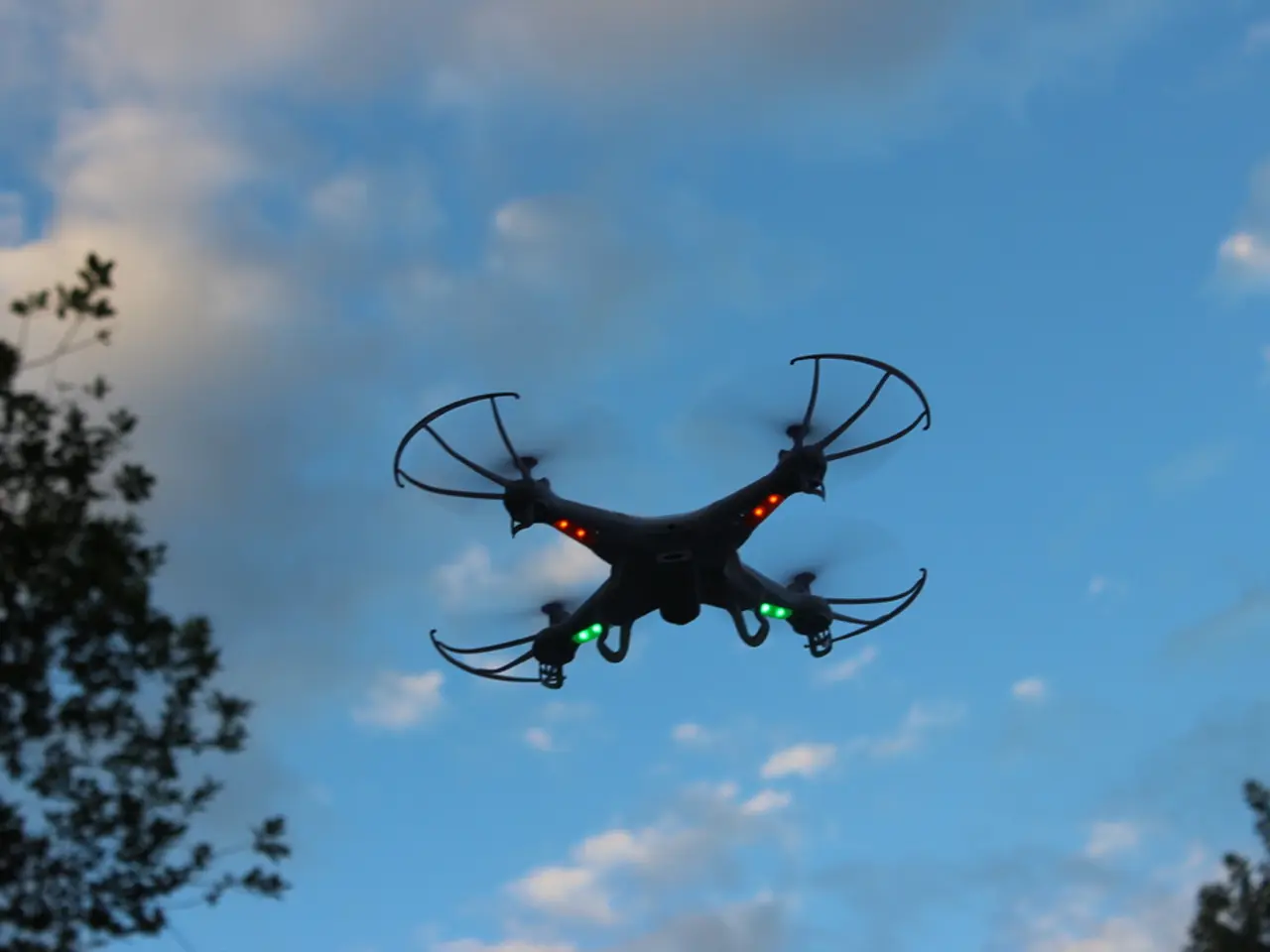
In the modern world, drones have become a common sight in our skies. However, they can sometimes pose a threat to personal privacy and safety. Here's a comprehensive guide on how to report and protect yourself from suspicious drone activity, all while staying within the boundaries of Federal Aviation Administration (FAA) rules.
First and foremost, if you spot a drone operating in unauthorized areas or behaving unsafely, it's essential to report the incident to the FAA or local law enforcement. The FAA requires operators to report security breaches, loss of control, unauthorized access, or flights causing damage over $500. You can provide details such as drone make, model, registration, flight path, and observed suspicious behaviors.
It's crucial to document incidents carefully. Operators are required to maintain flight records and report unplanned or precautionary landings, malfunctions, or security breaches. Be sure to include date, time, location, drone descriptions, flight patterns, and any damage or threats caused.
When it comes to confronting drone operators directly, it's best to avoid such encounters to protect your safety and preserve evidence. Instead, report to FAA or local authorities with your documented information.
It's important to note that only federal law enforcement officials have explicit authority to mitigate illicit drones. State and local police usually need federal support to act against rogue drones.
If you own a drone yourself, it's essential to follow FAA and local laws for its use. This includes maintaining proper authorizations, flying below 400 feet, and not flying over people or restricted areas.
Strict federal rules control the usage of signal jammers due to their potential interference with GPS signals. The right to privacy does not include the right to destroy aircraft, even small unmanned ones. Drones are considered aircraft under FAA regulations, and damaging an aircraft is a serious federal offense.
On a positive note, several tech firms are developing easy-to-use drone detectors that won't create disturbances or need court-issued restraining orders to operate. Additionally, drone manufacturers already install geofencing technology directly into their products, setting virtual boundaries that block drones from entering specific zones, making it an entirely legal method for protecting property.
In conclusion, use official FAA channels or local law enforcement to report suspicious drone activity with detailed evidence, and know that federal authorities have the primary role in drone countermeasures. Keep thorough records of any incidents to protect yourself legally.
- In the realm of technology,, especially home-and-garden products, it's vital to consider cybersecurity when purchasing a drone, ensuring that your personal data and the drone's functions remain secure.
- The advancements in data-and-cloud-computing have opened up opportunities for drone manufacturers to implement geofencing technology, helping to maintain personal safety by restricting drones from sensitive areas.
- While it's crucial to stay informed about general-news related to drone technology, understanding crime-and-justice implications such as the consequences of interfering with drone signals is equally important to ensure compliance with laws and regulations.