Napoleon's Monuments Renovated
Restoring the Napoleon Stones: A Link to Neuss's Napoleonic Past
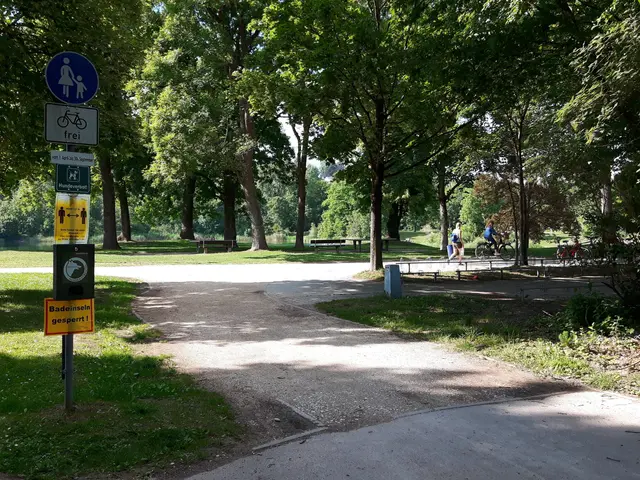
In the heart of Neuss city garden, the restoration of the Napoleon stones stands as a testament to the city's rich historical connections. These stones, adorned with the inscription "NAPOLEON EMPEREUR MDCCCIX," are a tangible reminder of Napoleon's era, reflecting the military and urban transformations of the early 19th century.
Originally called for by Emperor Napoleon himself, the North Canal was designed to make shipping possible from Neuss to Antwerp in the Scheldt estuary. The Grand Canal du Nord project, associated with the Napoleon stones, was likely part of Napoleon's broader infrastructural ambitions in Northern Europe. The canal was planned to extend from the Rhine in Neuss to the Flemish metropolis of Antwerp, symbolizing Napoleon's vision of infrastructural modernization aimed at strengthening his empire.
The Napoleon stones, placed by the city's construction company Fazlic, were originally part of the fortress demolished by Napoleon in 1806. Known as the "Gibraltar of the North," this fortress's destruction marked a significant shift in military strategy and territorial control under Napoleon's rule. The stones, now professionally restored, symbolize both the destruction and subsequent urban changes initiated by Napoleon, who gifted the area tied to these stones to the city through his brother Jérôme.
For those interested in the city's history and contemporary developments, a free newsletter is available. This newsletter covers various topics, including social developments, culinary arts, art, and culture in Neuss. The newsletter, designed and made by agencies Blue Moon and Grein, is delivered by the city's stonemason Cornelia Pasthor, who recreated the inscription on the restored Napoleon stones.
Subscribing to this newsletter is free of charge and comes with the assurance that it does not send spam. The newsletter's privacy policy is available for review, ensuring subscribers' personal information remains secure.
The restoration of the Napoleon stones and the associated Grand Canal du Nord project serve as a connection between Neuss's contemporary identity and its Napoleonic past. They remind us of the era's historical transformations and the legacy of Napoleon's influence on the city. However, it is important to remember that the Napoleonic era brought much suffering to the population, both in the Rhineland and throughout Europe.
[1] For more in-depth information about the restoration and the topics covered in the newsletter, subscribers are encouraged to check their inbox or spam folder to confirm their subscription.
[1] The newsletter, covering various aspects of Neuss's culture, history, and contemporary lifestyle, features a focus on the Napoleon Stones restoration project, providing readers with a home-and-garden perspective of the revived historical landmark.
[2] The restored Napoleon Stones, standing as a reminder of Neuss's historical connection with Napoleon, symbolize not only the city's Napoleonic past but also serve as an inspiration for modern home and lifestyle design, inspiring homeowners to incorporate historical elements into their own gardens.