Music Instruction Emphasizing Relaxation: Significance of Unwinding During Piano Practice
=========================================================================================
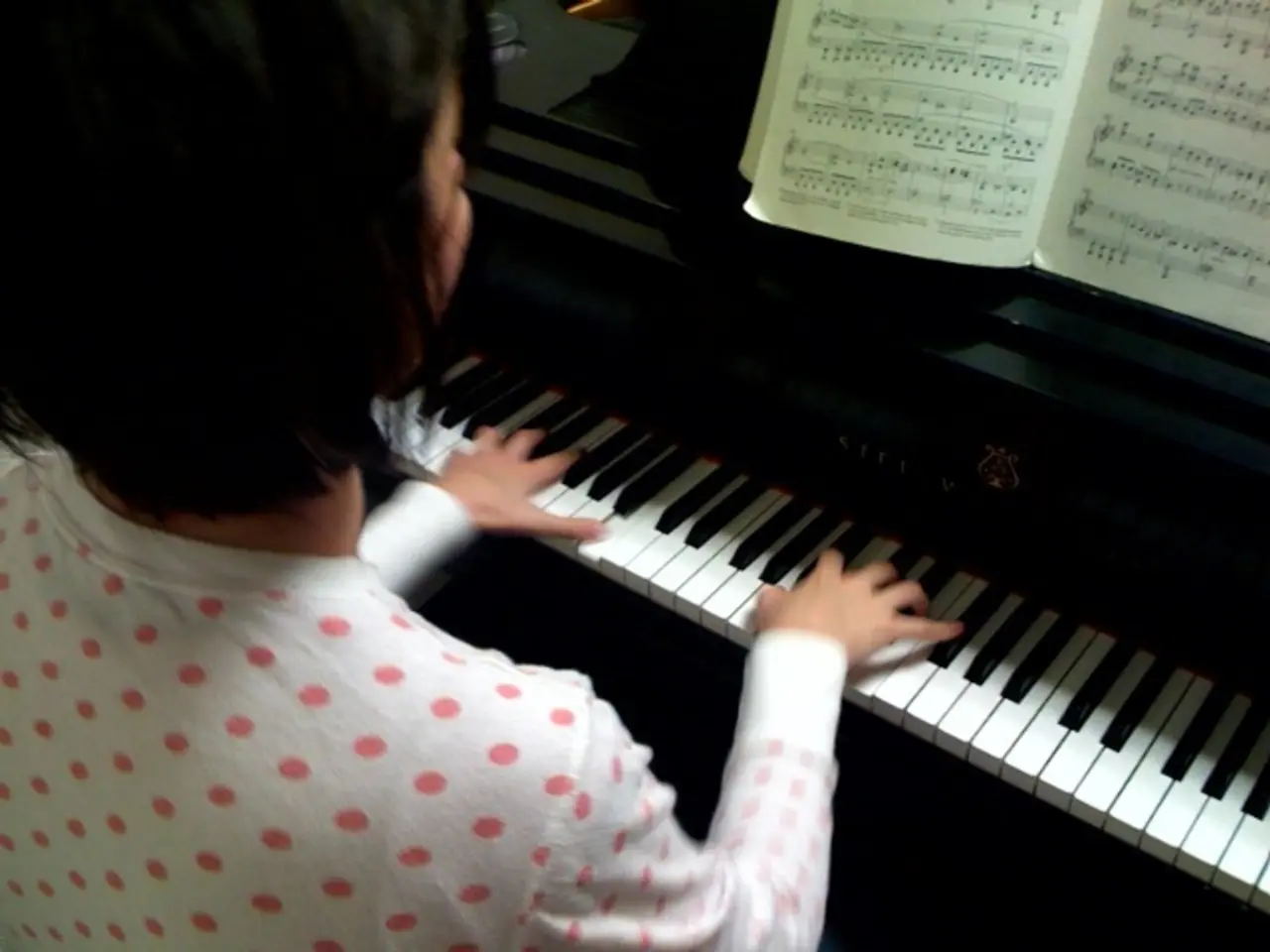
The Scaramuzza technique, a renowned method developed by Argentine pianist Vicente Scaramuzza, is an essential tool for classical piano players seeking to improve their skills and achieve a smooth, connected sound. This technique, used in 85% of cases for playing legato melodic passages and classical scales crisply, emphasizes natural hand movement, ergonomic posture, and efficient finger control.
One of the key benefits of the Scaramuzza technique is its ability to improve finger independence, strength, and flexibility. By incorporating numerous finger exercises, this method trains the fingers to move independently and to lift and place them quickly and accurately on the keys. This results in a wider dynamic range and a richer tone.
However, it's crucial to perfect an optimal activation mechanism to ensure a well-defined tone quality and quick reaction speed. This involves learning to use the weight of the arms to produce sound, rather than relying solely on the fingers.
To avoid stress injuries while learning and practicing the Scaramuzza technique, consider the following tips:
- Maintain proper posture: Ensure your back is straight and relaxed, shoulders down, and arms at a comfortable height. Avoid slouching or leaning forward, which can cause unnecessary tension.
- Use natural hand and finger movements: Scaramuzza’s method encourages fluid, relaxed finger and wrist motion rather than rigid or forced movements. Avoid excessive tension or gripping the keys tightly.
- Warm up gradually: Begin each practice session with gentle warm-up exercises to prepare your muscles and tendons. Light scales, arpeggios, and finger independence exercises help increase blood flow.
- Take frequent breaks: Avoid long continuous practice without rest. Short breaks every 20-30 minutes help reduce muscle fatigue and prevent overuse injuries.
- Focus on relaxation: Pay attention to areas where tension may build up—such as shoulders, wrists, or forearms—and consciously relax them. Mindful awareness can prevent chronic strain.
- Avoid over-practicing difficult passages: Instead of forcing difficult sections for extended periods, break them into smaller parts and practice slowly with mindful technique to avoid stress.
- Use correct fingering and hand position: Follow Scaramuzza’s recommended fingerings and hand positions to promote ergonomic movement. Avoid awkward reaches or unnatural stretches.
- Listen to your body: If you feel pain, numbness, or unusual discomfort, stop and rest. Persistent symptoms should be evaluated by a medical professional experienced with musicians’ injuries.
- Incorporate stretching and strengthening exercises: Gentle stretches for fingers, wrists, and arms outside of practice can improve flexibility and reduce injury risk.
- Seek guidance from a qualified teacher: A teacher trained in the Scaramuzza technique can ensure you are applying the method correctly and help adjust your technique to avoid strain.
By integrating these practices, you can learn the Scaramuzza piano technique effectively while minimizing the risk of stress injuries. Whether you're a beginner or an advanced player, the Scaramuzza technique is a valuable starting point for anyone looking to improve their classical piano playing.
- A composer might find the Scaramuzza technique beneficial for composing and performing intricate classical piano music, as it enhances finger independence, strength, and flexibility.
- To create a harmonious home-and-garden atmosphere, ambient music played on a classical piano using the Scaramuzza technique can provide a serene and elegant background sound.
- An entertainment lifestyle that includes attending classical concerts featuring piano performances employing the Scaramuzza technique can offer a fresh perspective on virtuoso playing and the art of classical music.