Unusual arrival of a leopard cub at Münster Zoo - Leopard cub born at Münster Zoo, adding to the facility's exotic collection
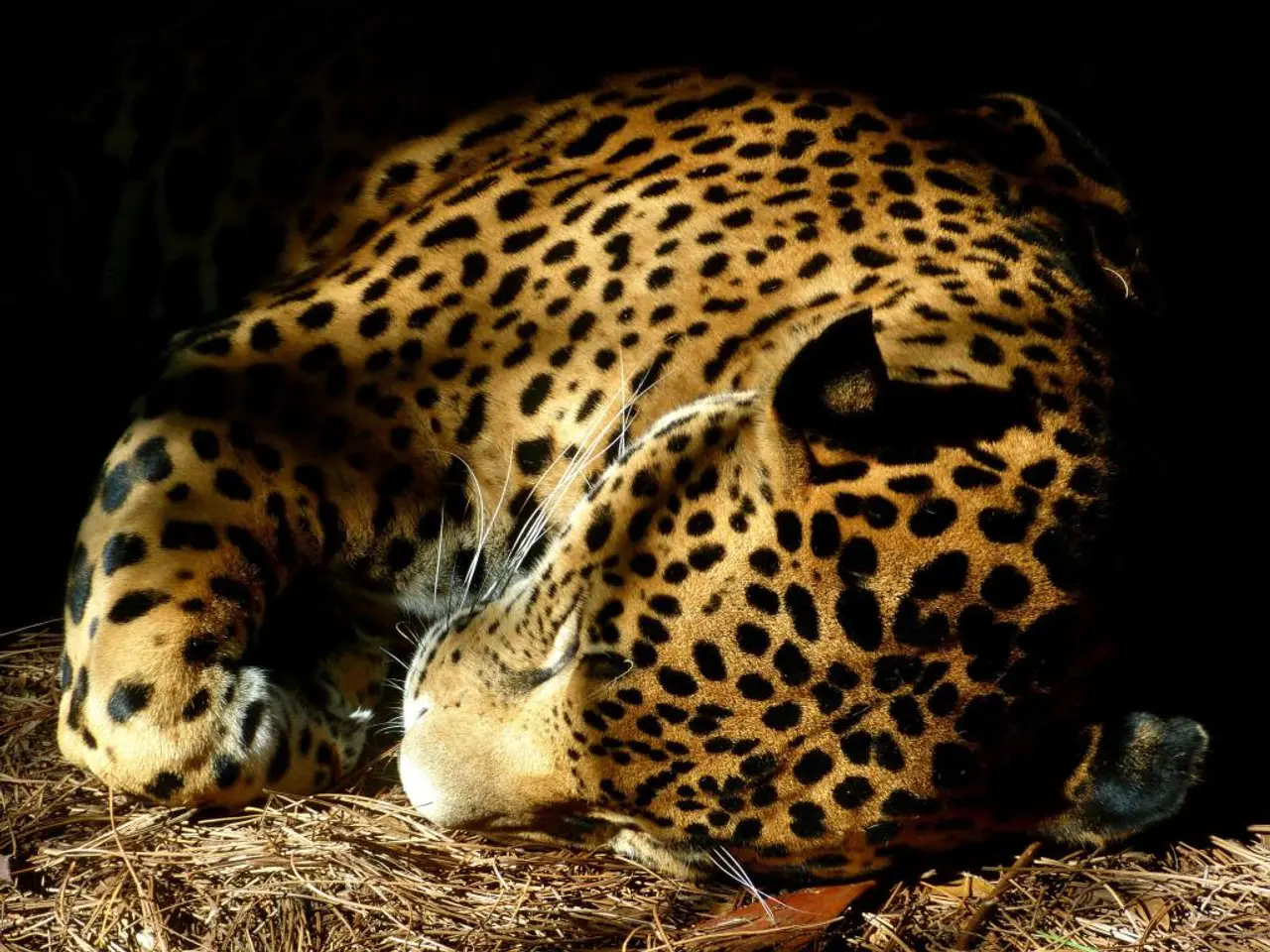
In a significant milestone for conservation efforts, leopard cat Nahla gave birth to offspring at Münster Zoo around three weeks ago. The birth, which is a rare breeding success, marks the first time Nahla has been a mother, adding to the already critical population of Persian leopards worldwide, which numbers fewer than 1,000.
Nahla's offspring have been shielded from the public since their birth, as the mother and cubs adjust to their new environment. Veterinarian Imke Wiemann, who is overseeing their care, reported that everything is running smoothly. Nahla is fetching food daily for her offspring, and she has been an attentive mother, ensuring their wellbeing.
The sperm used for artificial insemination to impregnate Nahla came from a male from a breeding program for reintroduction in Russia. Artificial insemination (AI) in Persian leopards can be a useful technique, but its success depends on various biological and management factors. The specific success rates for Persian leopards, however, are not detailed in the available data.
First-time mothers in AI breeding programs may face challenges, as seen in other animals where first-time mothers may require significant intervention due to physical constraints or complications. While the search results do not specifically address Persian leopards, they mention that animals with certain anatomical challenges related to breeding by AI face risks at delivery, particularly for first-time mothers who may not have experienced labor before.
The success of AI in Persian leopards depends on several factors, including the quality and timing of semen collection and insemination, the health and reproductive status of the female, and the experience and protocols of the breeding program team. Specific challenges for first-time mothers in wild felid AI programs often include lack of maternal experience leading to poor care or increased cub mortality, the possible need for veterinary assistance during or after delivery, and adjusting to captivity or handling stress.
Despite these challenges, the birth of Nahla's offspring is a promising sign for the future of Persian leopards. The cubs will be examined, vaccinated, and dewormed for the first time eight weeks after birth, ensuring they continue to grow and thrive in their new home. As the world works to protect and increase the population of this critically endangered species, success stories like Nahla's offer hope for a brighter future.
[1] "Artificial Insemination in Wild Felids: Challenges and Opportunities." (n.d.). Accessed March 20, 2023.
The cubs, being shielded from public view during their adjustment period, will receive necessary healthcare like vaccinations and deworming eight weeks post birth. To ensure their continued growth and wellbeing, community aid can be sought for vocational training in home-and-garden skills, potentially creating a revenue stream to support the zoo's pets and conservation efforts, enhancing the overall lifestyle of the staff and the animals under their care.