Gregory Crutsinger, the visionary behind Scholar Farms, featured in our Innovator Series.
Gregory Crutsinger is a renowned figure in the field of drone-based environmental science, known for his significant contributions to research-focused aerial data collection. With a Ph.D. in ecology and evolutionary biology from the University of Tennessee, Crutsinger has spent over a decade studying plant ecology and biodiversity across diverse ecosystems.
Bridging Technology and Science
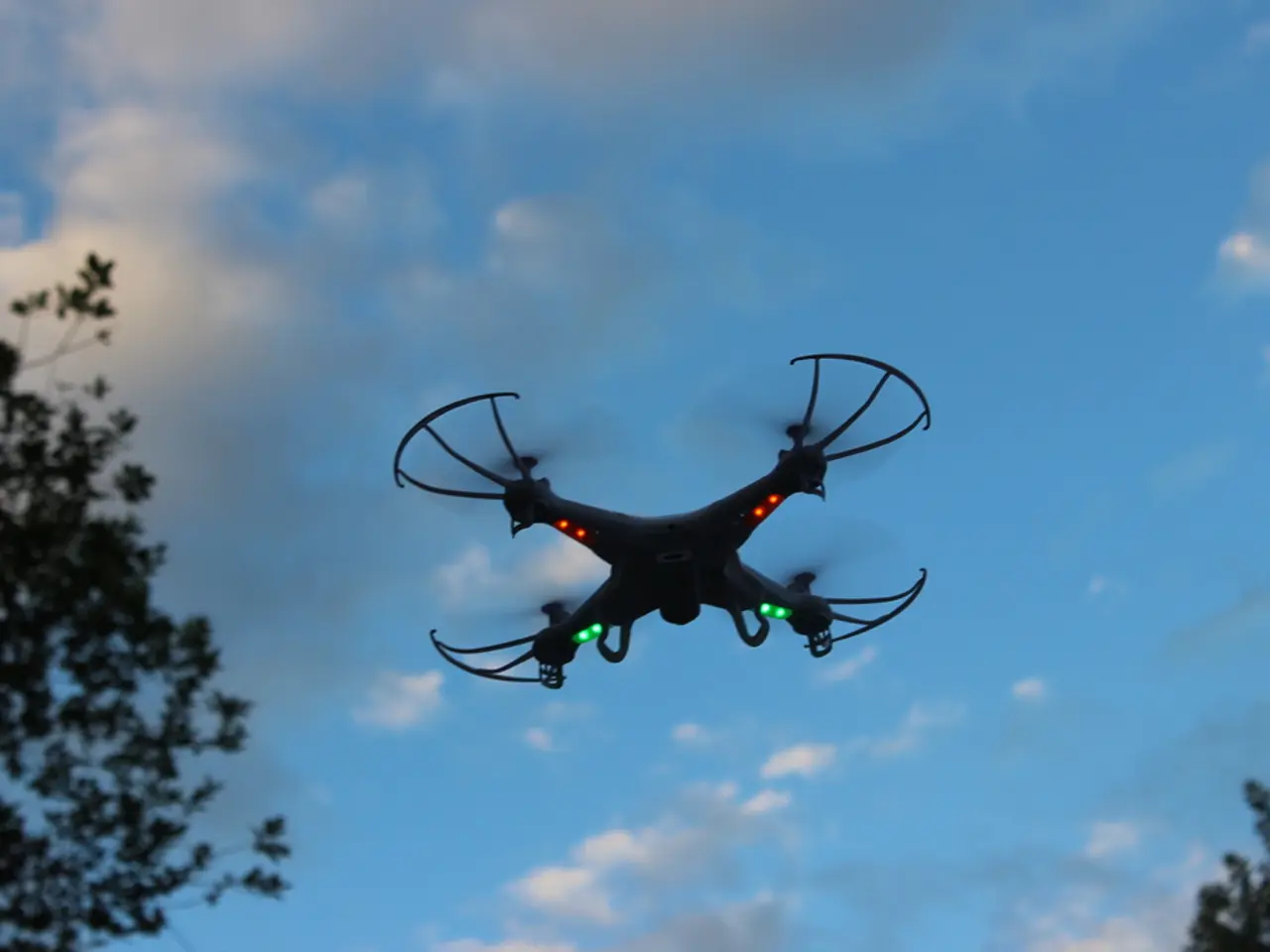
Crutsinger's work primarily revolves around leveraging unmanned aerial vehicles (UAVs), or drones, to gather high-resolution spatial and temporal data that advance ecological and environmental research. His innovative use of drones for environmental monitoring has helped pioneer methodologies for tracking biodiversity, assessing vegetation health, and studying habitat changes with unmatched detail and efficiency.
Advancing Aerial Data Collection
Crutsinger's approach emphasizes tailored data collection protocols that meet specific research objectives, improving the quality and relevance of aerial datasets in scientific studies. By integrating advanced sensors on drones, such as multispectral or hyperspectral cameras, he has contributed to enhanced precision in detecting ecological variables like plant stress, species composition, and environmental changes over time.
Making a Difference
Crutsinger's projects often focus on practical applications such as habitat restoration, conservation planning, invasive species detection, and climate change impact assessments, demonstrating the utility of drone technology in addressing pressing environmental challenges. His work can be explored on LinkedIn, Scholar Farms' official website, and other related platforms.
Scholar Farms: Accessible Aerial Data
Crutsinger founded Scholar Farms to help scientists, growers, and field teams access high-quality aerial data. Through Scholar Farms, Crutsinger delivers workshops, webinars, and digital courses focused on data pipeline design, sensor selection and calibration, vegetation and landscape analysis, and drone mission planning with scientific rigor.
Scholar Farms supports a variety of projects, including vegetation health analysis, forest and wildfire mapping, agricultural research, flood and hurricane response, and AI training datasets in remote sensing applications. During the 2017 Northern California wildfires, Crutsinger coordinated drone teams to collect aerial data for burn severity analysis.
The Future of Drone Technology
Crutsinger envisions drone systems becoming standard tools in field research, conservation, and agriculture. He advocates for scalable workflows that combine AI automation, edge computing, and open-source platforms to streamline data analysis.
Crutsinger's keen interest lies in the potential societal impact of drone technology advancements. He continues to help researchers and field teams transform aerial data into reliable, real-time intelligence-improving outcomes across science, agriculture, and disaster response.
- In the realm of environmental science, Gregory Crutsinger's work employs data-and-cloud-computing technology through drones to gather crucial information about vegetation health, biodiversity, and habitat changes.
- Crutsinger's innovations in technology extend to home-and-garden projects as well, where he ventured beyond ecology to found Scholar Farms, a platform offering workshops and digital courses on drone-based aerial data collection.
- With a vision for the future, Crutsinger foresees a world where technology, specifically drones, are integral to science, lifestyle, and environmental-science research, aided by automation and AI to create more efficient and scalable workflows.