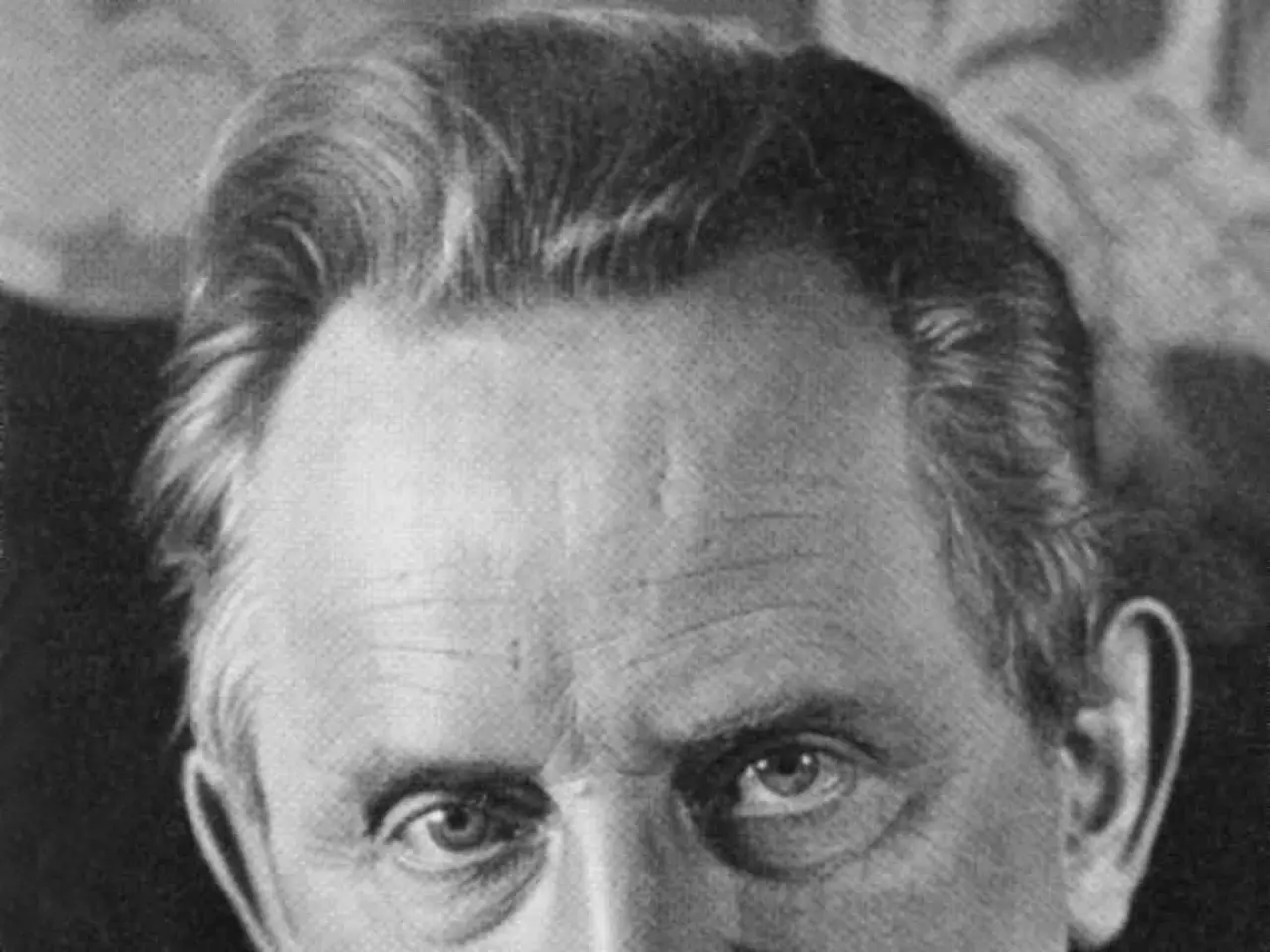
Edward Witten's revolutionary theories reshaped physics and mathematics forever
Edward Witten has transformed theoretical physics and mathematics through decades of groundbreaking research. His discoveries span string theory, quantum field theory, and deep mathematical structures. In 1990, he became one of the few physicists ever awarded the Fields Medal, the highest honour in mathematics.
Witten's most famous achievement came during the second superstring revolution. He proposed M-theory, a framework unifying five seemingly distinct string theories into a single, overarching idea. This theory suggested that each version of string theory represented a different limit of one fundamental structure.
His work in quantum field theory (QFT) has been equally influential. He advanced the study of anomalies, topological QFTs, and supersymmetric theories. His insights into quantum chromodynamics (QCD) and the strong CP problem have also shaped modern physics.
Beyond physics, Witten has made lasting contributions to pure mathematics. His research in topology, geometry, and representation theory has bridged gaps between disciplines. A notable example is his application of Morse theory to supersymmetric quantum mechanics, revealing unexpected connections between abstract maths and physical systems.
Witten's career has redefined how physicists and mathematicians approach fundamental questions. His 1990 Fields Medal remains a rare distinction for a physicist, reflecting the depth of his impact. Today, his theories continue to guide research in both fields, from the unification of string theories to the mathematical foundations of quantum physics.