
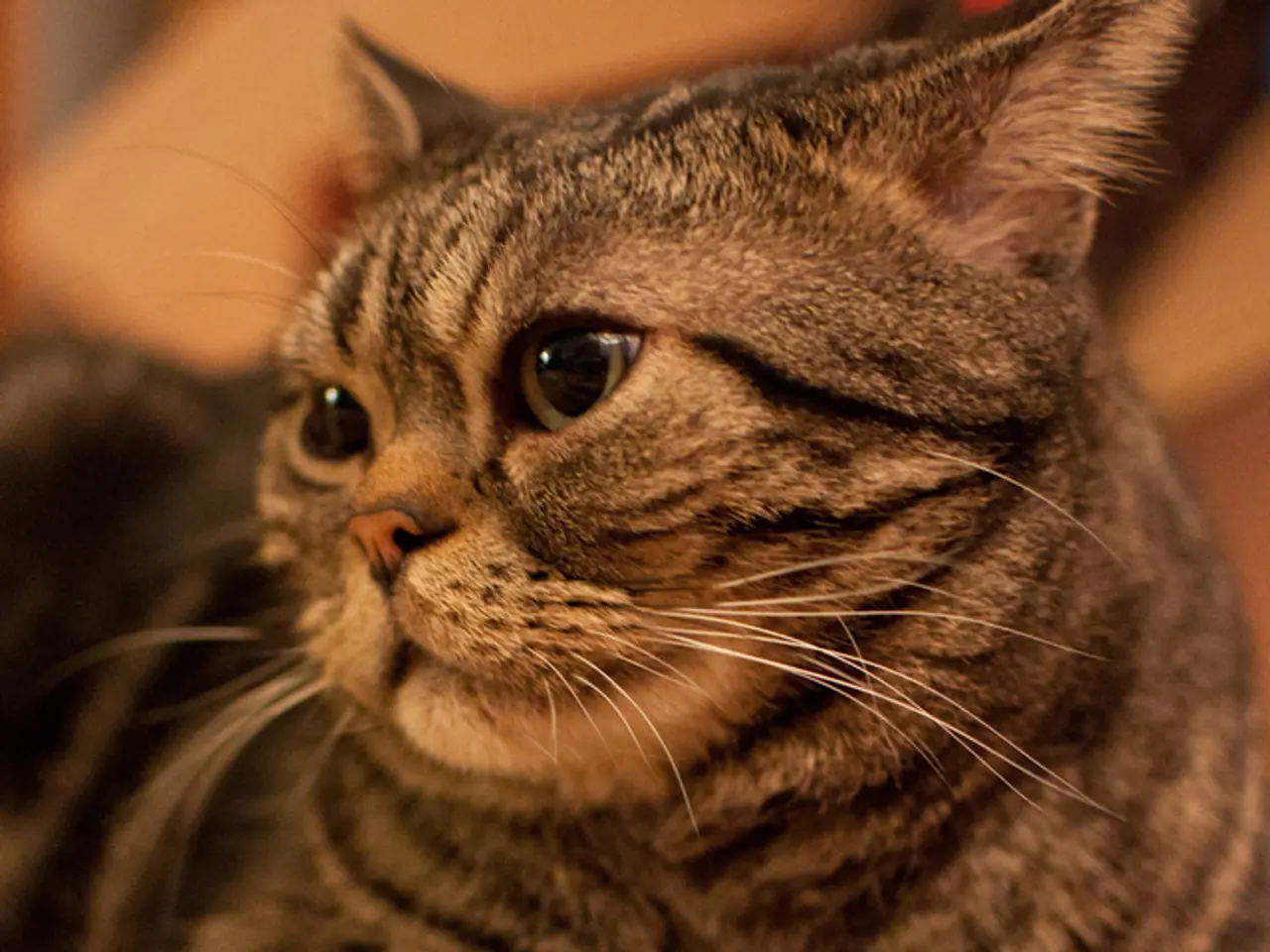
Comparing Forest Felines: A Guide to Choosing Between the Russian and Norwegian Varieties
The Siberian Forest cat and the Norwegian Forest cat, two of the most intriguing breeds in the feline world, share some similarities but also exhibit key differences. Let's delve into their distinctive traits across personality, grooming, exercise needs, trainability, and health.
Personality
The Siberian Forest cat, with its high intelligence and deep affinity for humans, is a sociable, affectionate, and playful companion. Unlike its Norwegian counterpart, it bonds deeply with its owners, making it an excellent family pet. On the other hand, the Norwegian Forest cat, equally intelligent, is more independent and less focused on training. It possesses a more alert expression and can be harder to engage in learning tricks or commands.
Grooming
When it comes to grooming, both breeds sport dense, thick coats. However, the Siberian Forest cat requires more frequent grooming due to its triple-layered coat, which sheds year-round with heavy shedding in spring and autumn. Regular brushing is essential to prevent mats and tangles. The Norwegian Forest cat's grooming needs are somewhat less demanding, with brushing recommended twice a week, as its coat sheds year-round, more intensely in spring and autumn.
Exercise Needs
Both breeds are agile jumpers with strong muscular builds, enjoying climbing and active play. The Siberian's playful and social nature often translates into interactive play with owners, while the Norwegian is also active but often more independent and focused on problem-solving or hunting-like behavior.
Trainability
The Siberian Forest cat is more eager and amenable to learning tricks and commands, making it more trainable and responsive to human interaction. In contrast, the Norwegian Forest Cat, while intelligent, can be stubborn or distracted, less focused on training engagements.
Health Considerations
Both breeds are generally healthy and well-adapted to cold climates. The Siberian Forest cat is reputed to be hypoallergenic due to producing lower levels of the Fel d 1 allergen, beneficial for allergy sufferers. The Norwegian Forest cat has no specific breed health issues highlighted here, but both breeds require regular vet care, especially during heavy shedding seasons to avoid skin issues from mats.
Choosing the Right Cat for You
In summary, Siberian Forest cats often suit owners seeking a sociable, trainable, affectionate companion requiring more grooming, while Norwegian Forest cats tend to fit those preferring a clever, independent, lower-grooming cat with a strong hunting instinct. Both are active, healthy forest breeds with long coats and high intelligence.
Playtime Essentials
Both the Siberian and Norwegian Forest cats require interactive cat toys and cat puzzle feeders for play. They enjoy climbing and exploring, needing plenty of play opportunities and stimulation. The Norwegian is reported to be the more high-energy of the two.
Training Tips
Dr. MacMillan suggests that patience and positive reinforcement will get the best results when training either of these breeds.
Key Differences at a Glance
- Siberian Forest cats are larger, with a barrel-shaped body, medium-sized ears with rounded tips, and a thick, triple coat that comes in many colours.
- The Norwegian Forest cat is one of the largest cat breeds, with a triangular-shaped head, large, almond-shaped eyes, and a long and muscular body, always having a mane.
- The Siberian Forest cat has a more rounded face, curved profile, and soft features, with large, round eyes set wide apart and coming in shades of green, gold, green-gold, and copper. The Norwegian Forest cat has a more alert expression and a longer, straighter profile.
Health Risks
While both breeds are generally healthy, the Norwegian Forest cat is more at risk of inherited conditions such as glycogen storage disease IV and hip dysplasia, which can lead to arthritis. Siberian Forest cats may shed less Fel D1 protein than other cat breeds, which may benefit some mild allergy sufferers.
Conclusion
Both the Siberian Forest cat and the Norwegian Forest cat make wonderful companions, each with its unique traits and needs. By understanding these differences, you can make an informed decision when choosing the right feline friend for you and your family.
References:
- The Cat Fanciers' Association
- The International Cat Association
- The Norwegian Forest Cat Fanciers of America
- Rebecca, a veterinary surgeon
- Dr. MacMillan
- Georgia Guerin and Alexis De Leaver, editors
- The Siberian Forest cat, a sociable and playful companion, has a deep affinity for humans and bonds deeply with its owners, making it an excellent family pet.
- Its Norwegian counterpart, while equally intelligent, is more independent and less focused on training, possessing a more alert expression and can be harder to engage in learning tricks or commands.
- Both breeds sport dense, thick coats, but the Siberian requires more frequent grooming due to its triple-layered coat shedding year-round with heavy shedding in spring and autumn.
- The Norwegian Forest cat's grooming needs are somewhat less demanding, with brushing recommended twice a week, as its coat sheds year-round, more intensely in spring and autumn.
- Both breeds are active and enjoy climbing and active play, with the Siberian often engaging in interactive play with owners and the Norwegian focusing more on problem-solving or hunting-like behavior.
- The Siberian Forest cat is more eager and amenable to learning tricks and commands, making it more trainable and responsive to human interaction. The Norwegian, while intelligent, can be stubborn or distracted, less focused on training engagements.
- Both breeds are generally healthy and well-adapted to cold climates, but the Norwegian Forest cat is more at risk of inherited conditions such as glycogen storage disease IV and hip dysplasia, which can lead to arthritis.
- Siberian Forest cats may shed less Fel D1 protein than other cat breeds, which may benefit some mild allergy sufferers.
- Both breeds require interactive cat toys, cat puzzle feeders, and plenty of play opportunities for stimulation, with the Norwegian being the more high-energy of the two.
- Patience and positive reinforcement will get the best results when training either of these breeds.
- Understanding these differences allows for an informed decision when choosing the right feline friend for you and your family, as both the Siberian Forest cat and the Norwegian Forest cat make wonderful companions with unique traits and needs.