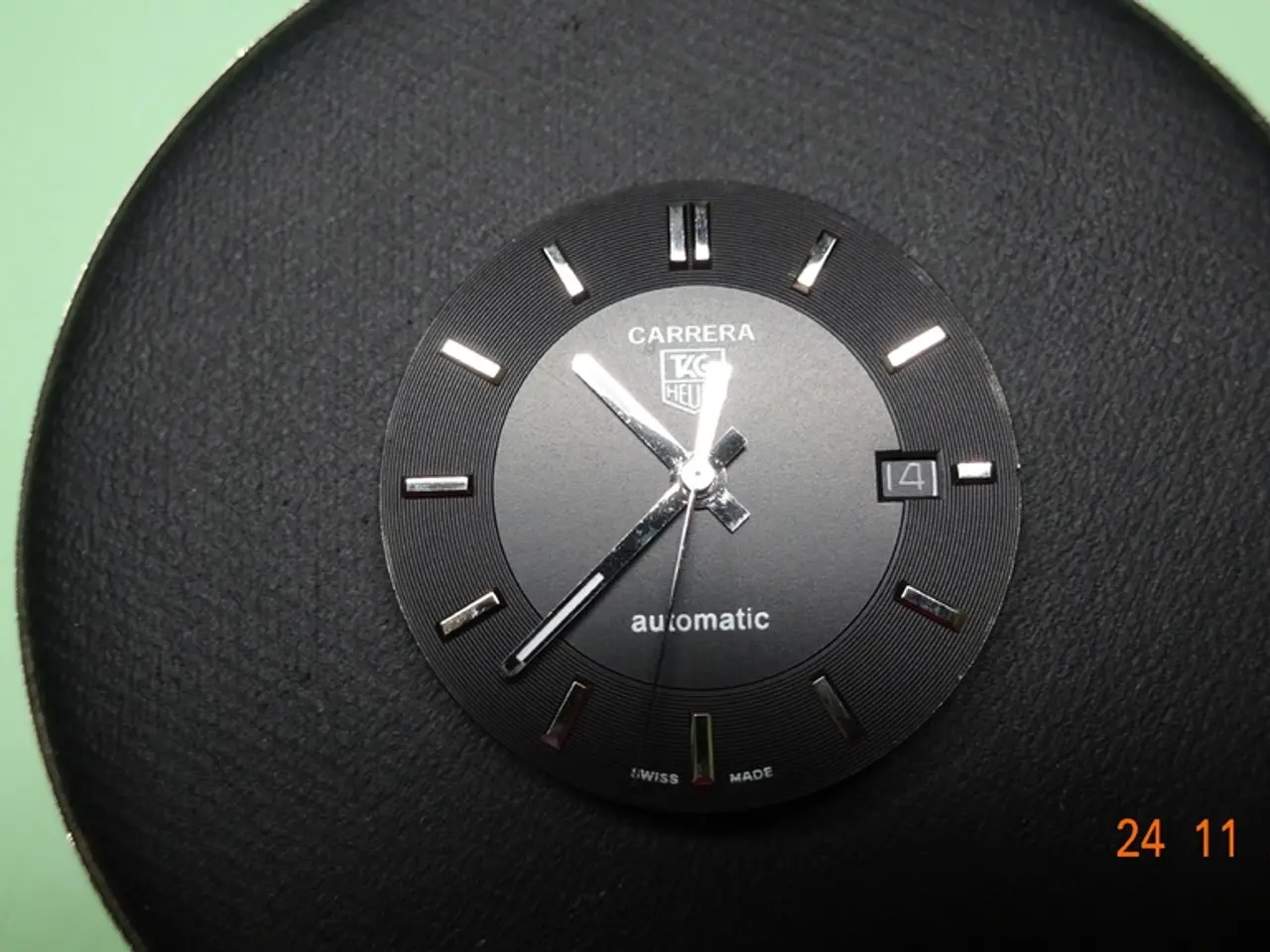
Close-up photography shots of various subjects and timepiece restoration work
Photography Tips for Clock Repair: A Focus on Detail
In the world of clock repair, capturing intricate details is crucial. One seasoned repairer shares their photography secrets, highlighting the Olympus E330 as their go-to camera for macro work, despite its 14-year age.
The Camera of Choice: Olympus E330
This vintage DSLR, though old, still delivers impressive results. With more than enough megapixels for detailed images, the Olympus E330 can work with artificial light or natural light from a west-facing window. Paired with an Olympus 50mm F2 macro lens, it's excellent for close-up clock shots, offering subject isolation with a pleasing background blur.
The Right Lens for the Job
When it comes to macro lenses, prioritise a dedicated lens with a focal length between about 90mm to 150mm. Longer focal lengths allow for a comfortable working distance, preventing the lens from obstructing your view or interfering with clock components. The lens should offer close focusing capabilities and high sharpness.
Lighting Matters
Reliable and consistent lighting is vital in extreme macro photography to avoid shadows and highlight intricate details. Small flash units like the Flashpoint MF12 (or Godox MF12) are highly recommended because they provide powerful, consistent flash, allowing for focus stacking and sharp images without dropped frames.
Stability is Key
Use a sturdy tripod to eliminate camera shake. Stability is crucial for macro photography since even slight movements blur details. It also facilitates stacking multiple shots for improved depth of field.
Choosing the Right Camera and Macro Lens for Clock Repair
For clock repair photography, opt for a DSLR or mirrorless camera with manual controls over aperture, ISO, and shutter speed. Entry-level DSLRs like the Canon EOS Rebel T7 (~$400) are sufficient if budget is a concern.
In summary, use a DSLR or mirrorless camera with manual controls, select a high-quality macro lens in the 90–150mm range for a workable distance and sharpness, utilise small, consistent flashes like Flashpoint/Godox MF12 for lighting, and employ a tripod for stability and consistent framing. This setup ensures you can document clock mechanisms clearly for repair or archival needs, minimising distortion and shadows while preserving delicate components.
A reader recently asked about taking macro shots for clock repair. The speaker's response? Embrace the power of the Olympus E330, invest in a quality macro lens, and master the art of lighting and stability for stunning, detailed clock repair photography.
In the realm of clock repair, investing in a high-quality camera and macro lens can significantly enhance the quality of repair photographs. For instance, the Olympus E330, though vintage, remains a reliable choice for macro work, especially when paired with an Olympus 50mm F2 macro lens.
When choosing a macro lens, prioritize a dedicated lens with a focal length between approximately 90mm to 150mm, as this offers close-up capabilities without obstructing your view or interfering with clock components.
Reliable and consistent lighting is essential in extreme macro photography. Small flash units like the Flashpoint MF12 or its equivalent, the Godox MF12, provide powerful, consistent flash that is ideal for focus stacking and clear, sharp images.
Finally, a sturdy tripod is crucial to eliminate camera shake and stabilize your shots. This is particularly important in macro photography, where even slight movements can blur details, making consistency in framing vital. Whether for repair or archival needs, this setup ensures you can document clock mechanisms clearly and minimize distortion and shadows while preserving delicate components.