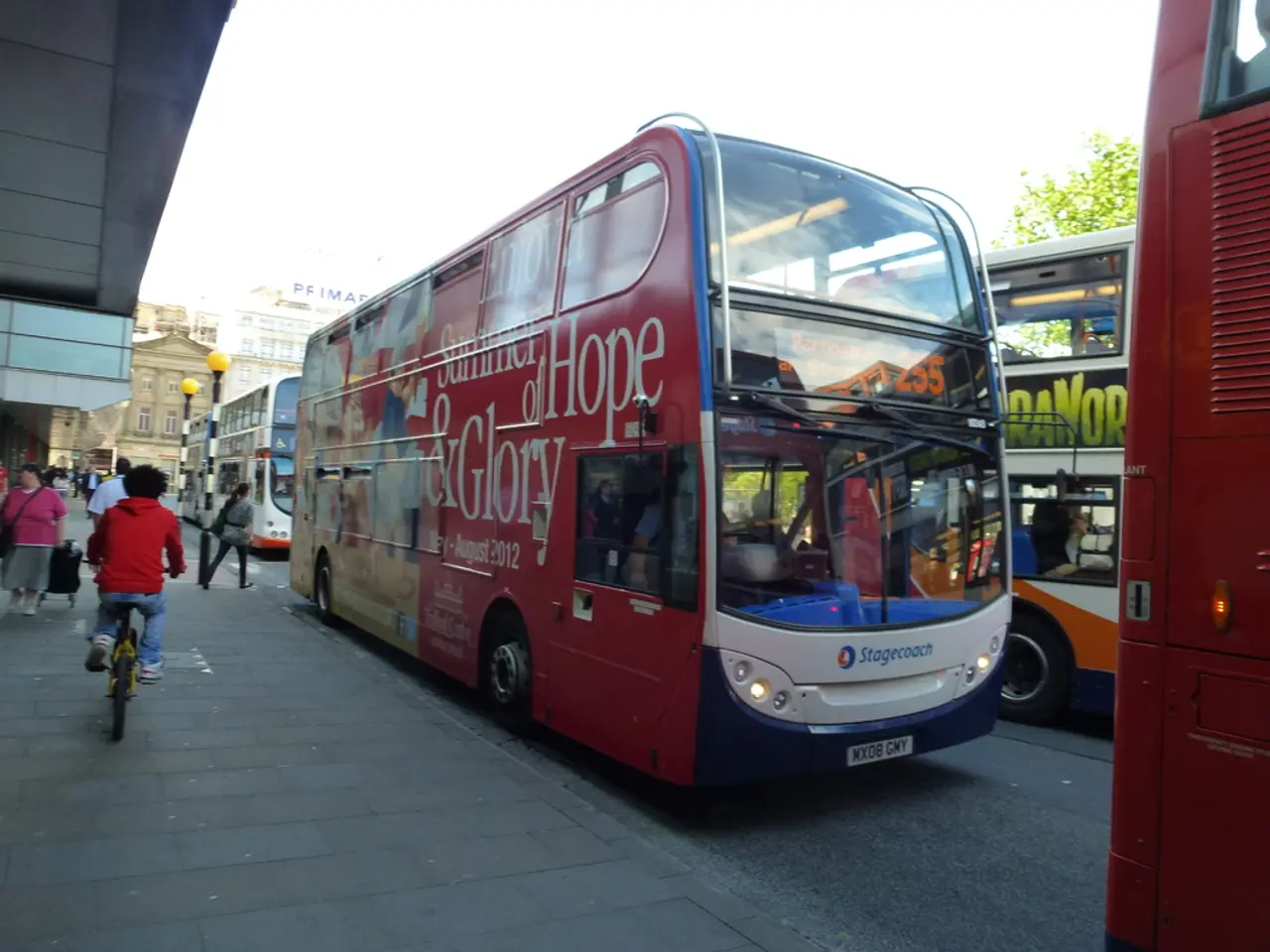
A sophisticated city is characterized by the affluent actively using public transportation. As stated by Enrique Peñalosa.
In the heart of Colombia, Bogotá experienced a significant shift in urban planning under the leadership of Enrique Peñalosa. Serving as Mayor on two separate occasions, Peñalosa's tenure marked a progressive era that prioritised social equality and human dignity.
Peñalosa ended his first term with the highest approval rating of any mayor in Bogotá's history, a testament to his impactful initiatives. His vision was to encourage people to meet in the streets as equals, and he achieved this by focusing on pedestrian-friendly infrastructure, dedicated bicycle lanes, and efficient mass transit systems like TransMilenio.
TransMilenio, a bus rapid transit system, moves over 2.3 million people a day along dedicated bus lanes, connecting poorer neighbourhoods to economic opportunities and services more effectively than previous car-centric models. Peñalosa's emphasis on the number of passengers over wealth was evident in his decision to dedicate a lane to TransMilenio buses only.
Peñalosa's urban planning initiatives also targeted the improvement of housing conditions and public spaces for the poor, aiming to foster greater social inclusion rather than segregation. He expropriated private parks and protected sidewalks with bollards to share space more compassionately.
One of Peñalosa's most significant achievements was the annual car-free day, backed by a referendum, and the introduction of a license lottery (Pico y Placa) to limit car usage. Traffic deaths decreased by 50% during his tenure, a clear indication of the success of these initiatives.
Peñalosa's personal experiences with inequality as a child influenced his belief that city design should promote equality and human dignity. He warned against becoming too obsessed with popularity, reminding that power is a means, not an end.
Despite facing low popularity, Peñalosa's vision, unified team, and focus on inequality helped him persevere. His first term approval rating plummeted to 17%, and he faced two recall elections midterm. However, he remained steadfast in his mission to create a more inclusive city.
In addition to transportation reform, Peñalosa commissioned a Metro Rapid Transit Line and built TransMiCable Cars to reach Bogotá's skirting hills. He also oversaw extensive construction projects, including the creation of over 300km of protected bike lanes, the widening of sidewalks, and the improvement of 1200 public parks.
Peñalosa believes that city design should prioritise public transportation over private vehicles. He asserted, "An advanced city is not one where the poor own a car, but one where the rich use public transport." He argues that the exclusivity of green spaces, sidewalks, and road space for the wealthy can foster feelings of inferiority and unhappiness, and advocates for public parks to replace private golf courses.
In conclusion, Peñalosa's urban planning initiatives in Bogotá had a significant impact on reducing social inequality by prioritising sustainable urbanism, public transportation, and equitable access to public space. His policies shifted urban policies towards social justice by making the city more accessible and livable for underserved populations.
- Peñalosa's focus on urban planning extended beyond transportation, as he also aimed to transform Bogotá's home-and-garden sector, advocating for public parks to replace private golf courses, contributing to a more equitable and inclusive lifestyle.
- While Peñalosa's mayoral tenure in Bogotá was marked by significant achievements in urban planning, his commitment to social justice and human dignity did not waver even when faced with political opposition or low popularity in general-news, demonstrating his unwavering dedication to societal improvements.